Music Collecting: Analord
Published by ambalek on
Digging the crates.

Sitting here with access to seemingly infinite music through streaming services, Bandcamp, etc, I occasionally find things that are missing. For example, I couldn't seem to find 26 Mixes for Cash by Aphex Twin, a pair of CDs I had on rotation with a hi-fi CD player and most likely an iPod over 20 years ago.
Looking over the CDs on my CD organiser, I couldn't find it anywhere. The CD organiser naturally contains current in-rotation albums, or proudly displayed rarities, but not everything. I went on the hunt for 26 Mixes.
The funny thing is, on this adventure behind bookcases, hidden nooks and crannies, up in the loft, buried beneath my synthesisers and patch cables, I discovered some real lost treasures. Sealed CDs and records, Boards of Canada rarities and interesting objects like the Dayvan Cowboy DVD. Memories started to surface about a totally different time in electronic music. I used to think of Aphex Twin, Autechre, and Boards of Canada as the sort of holy trinity of electronic music. They were the instant buys. And their associated labels released hidden gems waiting to be discovered.
Labels
I'd somehow forgotten about Rephlex, Skam, and Benbecula, the holy trinity of labels (I'm saying this tongue-in-cheek, but I think I actually believe it). I used to read forums about these labels, listen to new releases to figure out what I wanted in the permanent collection. This was the late 90s through the 00s. Bigger labels like Warp were also favourites, but those three felt like the real scene that I was into.
Fear of missing out: but you did miss out
Around the time Analord was released, my turntable died. I assumed we were moving away from the physical media era into pure digital. Streaming wasn't quite happening, despite it being obvious it would happen, but digital purchases were easy enough through Apple and maybe not too long later on Bleep.com.
I didn't buy the Analord records but did come to regret it somewhat. As an AFX release, it's got some of that acid 808/303 sound which I enjoy. It's generally minimalist: the instruments have space and sit in the mix perfectly. The sound design flips from classic acid to experimental sounds, probably some audio rate modulation (I mean how does Phonatacid work, the pad sound is like a sample: "dirty in a good way" says Reddit).
Sequencing
I always thought Analord, as a pre-Syro (Cirklon), post-Drukqs (partly PlayerPro tracker), was a groovebox-driven work with the machines acting sort of like band members, and if that's true the constraints kind of lead you (well me, clearly not AFX) down certain paths; loop fixation, tracks that work by having small numbers of patterns that are looped and parts muted.
Analord does feel like it might be relying on patterns on grooveboxes, but the sequencing uses tricks to make it feel somewhat organic at times. There are dramatic whole arrangement shifts, interesting stop/start moments (MC-4 Acid), pattern length changes, parts that sound like loops but are actually copies of patterns with variations. I assume it's a lot of subtle sequencing and many novel program changes. I find it interesting to work out which 303-like lines are not actually coming from a 303. Yeah I'm a nerd, but if these machines are band members then I'm merely paying them due respect.
Analogue
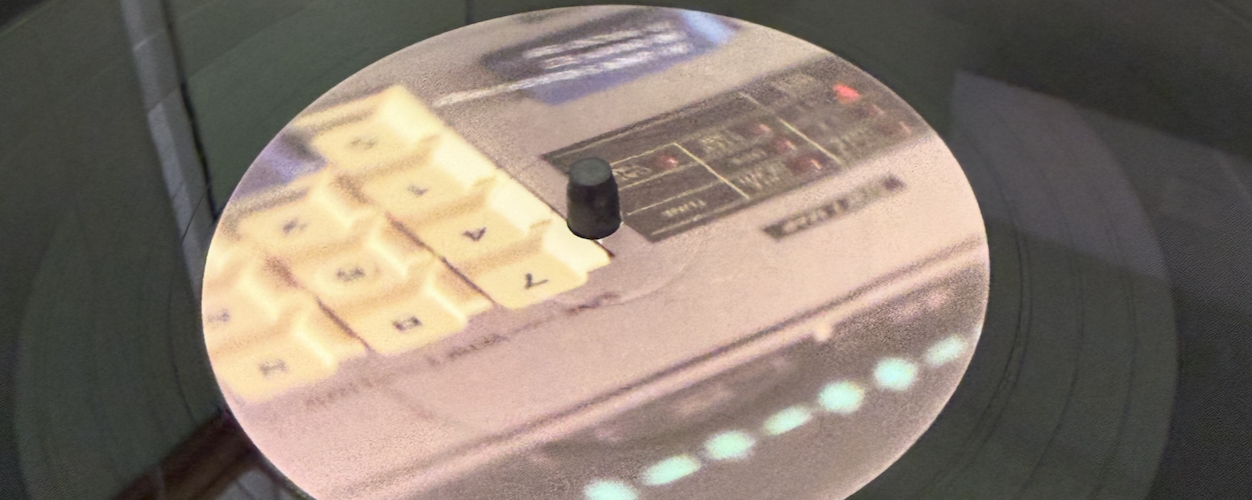
There's a simpler side to Analord that probably resonated more at the time, and maybe again about five years ago. Analord feels like electronic music made with analogue synths. It's not just a few analogue instruments but as analogue end-to-end as it can be; released on vinyl. It's kind of boring to say it but hearing it on vinyl is the way it's meant to be heard. There is the CD, Chosen Lords, and that's how I listened to it mainly, but I did have a friend on IRC who gave me some pretty nice mp3s of the records, so I had the full set (ironically never hearing the analogue release).
I don't believe Analord itself is 100% analogue. There were pre-mastered 48kHz WAV files released from whatever was recorded to DAT/Elcassette. What I mean about the analogue part of the concept is most of the sounds are analogue synths. There are times, like Fenix Funk 5, where there are voice-like sounds I'd assume were sampled, but it could easily be an analogue vocoder. To me it's not really important that the release is 100% analogue, it's that the core acid sound found new modes of expression using the same instruments from that era. Analogue in spirit, at least, not absolutist.
Another note about the pre-mastered WAVs was they had more tracks than are on the records or Chosen Lords. For example, Wheres Your Girlfriend (Another Version). Much like missing out on the vinyl release, I missed out on these WAVs too. They're not on Aphex Twin's Warp site, although there's one Analord 07 live version so that's something.
The reason I mention "five years ago" within the context of an analogue to analogue project is I think back in 2005/6 electronic music was in the middle of the softsynth revolution. Computers could seemingly do anything synths could do. There was no point in synthesisers or samplers anymore (don't get mad, it felt like that to me for a while). We could just load up Logic and Reason, abandon all logic and reason and install hundreds of effects and synth plugins. In a way it's a renaissance of creativity: musicians unchained by the affordability of hardware. And the rediscovery of hardware synths did happen. I can't say precisely when, but personally I saw how popular synth videos got around 2018 on YouTube and Instagram, with people like Hainbach showing how they made hardware-based electronic music, outside of computers.
From this point, looking back, an analogue to analogue project now feels like something I can imagine Hainbach doing (I'm pretty sure he does have a video about that precise topic), but in the 00s it was almost lost on a lot of electronic music fans. I read people on WATMM and scene-friendly sites (like The Milk Factory) saying broadly that they were sold on the Analord concept, but when I read reviews on more mainstream music websites they were a little cool on it. Or conflicted at least. The mainstream music writers seemed to think James had earned the right to revisit that acid sound, but it didn't feel like a forward move.
There's an interesting point there where to a lot of people electronic music wears the guise of forward-thinking music, and Analord perhaps doesn't quite fit that philosophy. Yet it's hard to say it's not experimental, and it's not exactly nostalgic. So what is it? I think it's just what it is, an interesting creative work with some great acid tracks.
The NPC has given you a quest
Actually getting hold of the Analord vinyl records in 2026 takes some legwork. Or Internet fingerwork. They're worth reasonable sums for each disc. For all we know there could be a re-release, or a full digital collection, out on Bleep sometime soon (just reissue the Rephlex WAVs, please!). If you go back and listen though, you might notice there are tendrils of Analord's production techniques to be found in later releases like Syro, Ceetah, London 03.06.17 [field day], and the SoundCloud dump. So it wasn't nostalgia, it was what the man does™. Perhaps it was just an interesting challenge, focusing on developing a specific set of skills.
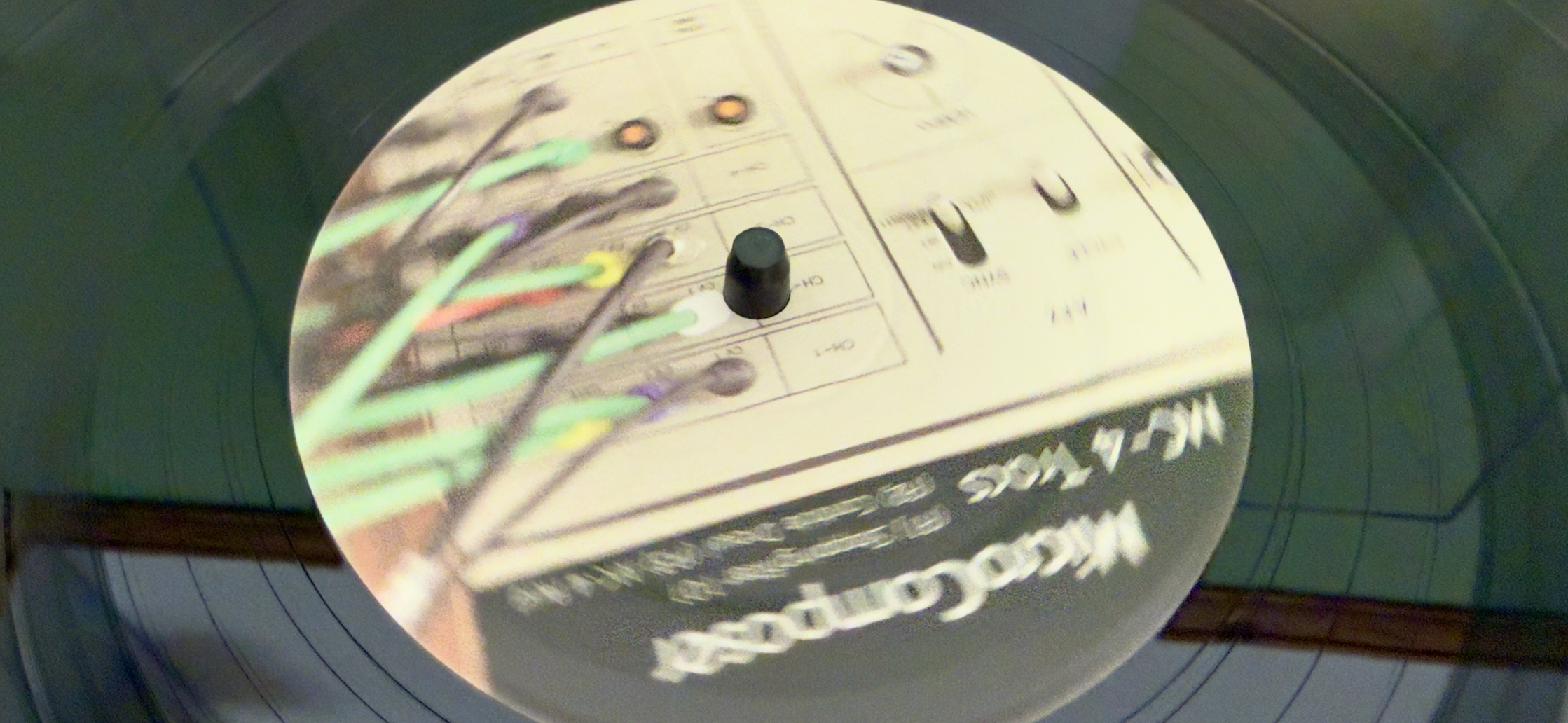
Now I've started a new hobby: once a month, trying to track down another Analord vinyl. I've found one so far, and let me tell you, I enjoyed finally hearing it off the disc instead of my old buddy's MP3s.
Back to the subject of 26 Mixes for Cash: I don't think I'll ever forget or get over the David Bowie/Philip Glass Heroes remix. And again that's another oddity that was hard to get hold of, because as I remember you could only get the Heroes remix on a Japanese CD that came free with a Philip Glass CD. So go digging in your physical media collection if you have one, find those things you lost, make connections, explore sounds. It beats social media, I'll tell you that!